She looked at me gravely. “Without me pointing at the same things as you do, without this intersubjectivity, how could there be any referential meaning?” she said. “You would not know that this situation is reality, if not for another, independent person to confirm it.”
I looked into her alert baby eyes and suddenly realized that my 14month old daughter is unlikely to express this stupid argument so eloquently. Argh, one of these dreams again! But I love the way my impertinent referentialist daughter lost the argument against her anti-realist dad.
As I awake from a dream turned lucid, I feel both exhilarated and the pang of melancholy of not yet being able to have that conversation with her nascent mind.
Wednesday, November 12, 2014

Computationalist Essentialism
True Computation is only possible in a silicon substrate. Brains cannot compute. It might look as if a brain could compute, but brains can only simulate computation. Obviously, nature is not able to imitate the computation feats of a silicon processor, but just as a thought experiment, some philosophers have suggested that a brain could take in the same inputs as a silicon chip, and return the same results. But that would not be True Computation. Just as a simulated thunderstorm cannot make you wet, and simulated money cannot make you rich, simulated computation lacks an essential element that can only be supplied by the intrinsic powers of silicon transistors.
Thursday, October 16, 2014
A puzzle game that makes us build a complete computer
If you should happen to be interested in how to turn an abstracted version of basic electronic circuitry into a puzzle game, read on.

My favorite casual computer games are puzzles that allow me to pore over the solutions for hours. I want lots of little things to go whirr! and click! and then do my bidding. If you have not played Trainyard yet, I strongly recommend checking it out! (You can start with the free edition, Trainyard Express, which thankfully does not have any advertising or in app purchases, by the way.) Trainyard lets you draw tracks with your finger, and little locomotives are traversing them in funky patterns, changing their colors on the way, before either crashing or finding their destinations.
 Trainyard is in principle Turing complete (i.e. you could build a computer in it), but Trainyard's playing area is limited to 7x7 fields, and you cannot place any of the interesting stuff yourself (like replicators and color changers), so practically, that's not possible.
On the other end of the spectrum, there is Minecraft, the famous open-ended, almost infinitely large brick-laying playground. Among other things, Minecraft is a three-dimensional cellular automaton, with a playing field that is 30 million cells wide and deep, and 255 cells high. Cells may interact with each other up to a distance of 15, with most of the interaction limited to the directly adjacent cells. Using specific materials that act as conductors, isolators, switches and repeaters, players can wire up their virtual fortresses with button-operated trap-doors and lighting. And some relentless players have figured out how to build computers in the game.
My favorite casual computer games are puzzles that allow me to pore over the solutions for hours. I want lots of little things to go whirr! and click! and then do my bidding. If you have not played Trainyard yet, I strongly recommend checking it out! (You can start with the free edition, Trainyard Express, which thankfully does not have any advertising or in app purchases, by the way.) Trainyard lets you draw tracks with your finger, and little locomotives are traversing them in funky patterns, changing their colors on the way, before either crashing or finding their destinations.
Trainyard is in principle Turing complete (i.e. you could build a computer in it), but Trainyard's playing area is limited to 7x7 fields, and you cannot place any of the interesting stuff yourself (like replicators and color changers), so practically, that's not possible.On the other end of the spectrum, there is Minecraft, the famous open-ended, almost infinitely large brick-laying playground. Among other things, Minecraft is a three-dimensional cellular automaton, with a playing field that is 30 million cells wide and deep, and 255 cells high. Cells may interact with each other up to a distance of 15, with most of the interaction limited to the directly adjacent cells. Using specific materials that act as conductors, isolators, switches and repeaters, players can wire up their virtual fortresses with button-operated trap-doors and lighting. And some relentless players have figured out how to build computers in the game.
Tuesday, September 23, 2014
Kasimir Malewich's Black Square

Exploring consciousness through anti-representationalism. No, we are not connected to a world of things through our bodies. Our connection is much more fragile: a gossamer network (of nerves, says the best theory we have) that admits a few bits of information at a time is all we have to make do with. Meaning is what we construct in our minds, not what we find in the world.
Ana Zhdanova: Чёрный квадрат
Friday, September 19, 2014
Don't be that Reptile
The parts of our brains that are responsible for the majority of our decisions tie into our most basic desires and impulses predate our history as primates, or even mammals. You may be familiar with the idea of the "triune brain" (McLean 1990), which suggests that we inherit physiological and territorial drives from reptiles, social behavior (along with the limbic system, that implements it) from early mammals, and cognitive strategies from higher mammals. Such a strict division is too simplistic, of course, but makes for a beautiful metaphor.

Indeed, I believe that we are controlled by three classes of drives: physiological ones (hunger, thirst, pain avoidance, libido etc.), social ones (affiliation, internal legitimacy, romantic affection), and cognitive drives (competence, uncertainty reduction, and aesthetics). All goal-directed behavior is directed upon the satisfaction of one (sometimes more) of these drives, or the avoidance of their frustration. Satisfying a drive creates pleasure, frustration a displeasure signal, and these are responsible for learning.
This happens mostly intuitively: the decision function is implemented outside the consciously accessible parts of our minds. It evaluates the relative strength of the urges, combines them with the expectancy of fulfilling them, adds a bonus threshold on the currently active motive, and there we go.
Indeed, I believe that we are controlled by three classes of drives: physiological ones (hunger, thirst, pain avoidance, libido etc.), social ones (affiliation, internal legitimacy, romantic affection), and cognitive drives (competence, uncertainty reduction, and aesthetics). All goal-directed behavior is directed upon the satisfaction of one (sometimes more) of these drives, or the avoidance of their frustration. Satisfying a drive creates pleasure, frustration a displeasure signal, and these are responsible for learning.
This happens mostly intuitively: the decision function is implemented outside the consciously accessible parts of our minds. It evaluates the relative strength of the urges, combines them with the expectancy of fulfilling them, adds a bonus threshold on the currently active motive, and there we go.
Thursday, September 18, 2014
Brief note on today's screening of “Rising Tide of Silence”
Thank you, fellow attendants, for a brief discussion after the movie. I want to hold on to a few reflections.
From today's meditation, at the beginning of an extensive planning session (with my beloved friend, D)
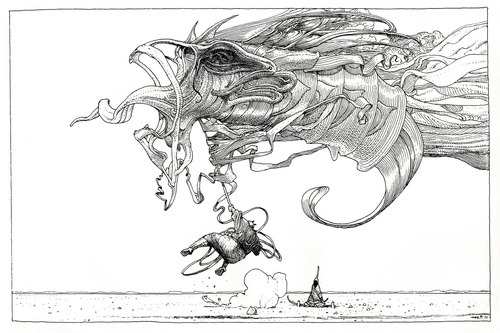
(Fig 1.: mental state at the beginning of the session)
If you want to, open your hands to the sky, to open yourself for reception. Or turn your palms down, to ground yourself.
Since you choose to open one upwards and one downwards, open the left one: that is the receptive side; the right one represents the giving principle.
Subscribe to:
Posts (Atom)