Thursday, September 18, 2014
Brief note on today's screening of “Rising Tide of Silence”
Thank you, fellow attendants, for a brief discussion after the movie. I want to hold on to a few reflections.

From today's meditation, at the beginning of an extensive planning session (with my beloved friend, D)
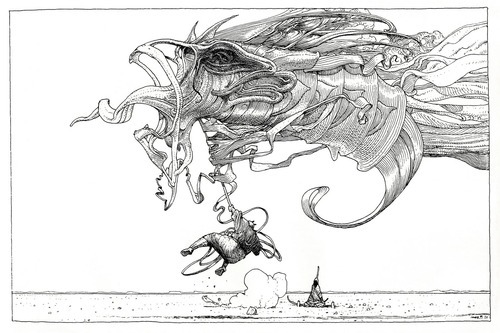
(Fig 1.: mental state at the beginning of the session)
If you want to, open your hands to the sky, to open yourself for reception. Or turn your palms down, to ground yourself.
Since you choose to open one upwards and one downwards, open the left one: that is the receptive side; the right one represents the giving principle.
Wednesday, August 13, 2014
Welcome to Yogilates for Nihilists
So you are here for this session of Yogilates. Some of you I have seen here before, some are new to this. You may find that the exercises become easier with time, but this will subside, of course, as your body is inevitably wearing out as the years pass.
Please lie down on your back and try to find a somewhat comfortable or at least bearable position. Inhale, stretch your legs and your arms, exhale, pull up your knees to your chest, and wrap your hands around your shins.
Rock slowly from side to side while imagining that this fetal pose offers protection and consolation. Inhale and stretch out again, then exhale and sit up, cross your legs and come forward onto all fours, if you can still manage to do it this way. Inhale while letting your belly drop, exhale while rounding your back. Hold the pose. Keep holding it. Hold on, and feel how the lack of breath compresses your stomach into a hard lump of anxiety.
Inhale again, while curling your toes into the ground, straightening your legs and lowering your head. Get down on your legs while keeping your arms on the ground. Repeat this cycle four times at your own speed. Don't forget your breathing. Now sense the futility of movement as you repeat this cycle four more times.
Stretch, exhale, fold, hold the tension. Now get on your knees, raise your arms and head toward the sky, inhale while keeping your arms stretched out and letting them drop slightly to your sides. The opening motion might give you an illusion of connectedness, but you are all alone.
(spoken in the grave voice of Portia Brockway, who is an excellent instructor, by the way)
Thursday, July 3, 2014
The world is not a physics engine, or The Death of (Physicalist) Realism
Chris Lee just wrote a nice introduction regarding the disenchantment of physicists with realist notions. Rather than re-explaining the experiments (see Bell's theorem, for starters), let me just point out what I consider to be the most important consequence for our cosmology, namely: the world is not a physics engine.
Obviously, it is impossible to know the nature of the world we inhabit while being entirely caught up inside it: the basic trouble with epistemology is that the world only shows us phenomena (Husserl), or, more basically but inaccurately: discernible differences, i.e. information, and not its structure itself. Thus, we cannot know if anything beyond the phenomena or the information exists. And if it does, what do we mean by "existence"?
(Physics engine: computing the interaction of things located in time and space)
Obviously, it is impossible to know the nature of the world we inhabit while being entirely caught up inside it: the basic trouble with epistemology is that the world only shows us phenomena (Husserl), or, more basically but inaccurately: discernible differences, i.e. information, and not its structure itself. Thus, we cannot know if anything beyond the phenomena or the information exists. And if it does, what do we mean by "existence"?
Sunday, June 22, 2014
Modes of Communication/Truth is the Weapon of the Underdog
Last week, during a public Medial Lab discussion, Judith Donath remarked that
This insight has interesting implications: First of all, there are several distinct kinds/modes of public communication. One is concerned with the transmission of content (ideas, arguments, data etc.). The other one is concerned with the elicitation of social behavior: we want the recipients of the communication to interact in certain ways, adopt a position towards us in relation to their own, and so on.
Without some form of deception, society would be completely impossible. Lies of omission allow us to cooperate.This prompted Joi Ito's elaboration: we tend to make communicative statements (including non-verbal ones, like the choice of clothing) in a very particular context. How can we make a communicative statement work when the context breaks down? In fact, this breakdown of context is almost the norm for communication that is available to non-homogenous audiences, say, both your peers and your parents, following you on Facebook: the same statement may very well mean very different things different recipients. By careful omission, which amounts to a type of deception, we may be able to realize our communicative intent even if the signs and concepts that make up our message mean different things to individual recipients.
This insight has interesting implications: First of all, there are several distinct kinds/modes of public communication. One is concerned with the transmission of content (ideas, arguments, data etc.). The other one is concerned with the elicitation of social behavior: we want the recipients of the communication to interact in certain ways, adopt a position towards us in relation to their own, and so on.
Tuesday, February 25, 2014
My first look into the Julia language
Julia is a rather new programming language; it started out in 2009 and is being developed by bunch of scientific programmers at the MIT. The syntax looks a little like Matlab, and the authors really seem to have mathematical and statistical applications in mind. But in my view, Julia has the potential to become really popular in a few short years down the road. Julia's syntax is almost as pleasant to me as Python's, nothing looks too arcane and mind-bending, and yet at its core, it is a much more modern language.
Wednesday, October 9, 2013
Old Wire Frame AI
One more of those strange dreams.
On the fourth day, we dug up the old wire machine. Y had discovered it first: A stunning and brilliantly constructed, entirely mechanical computer, a vast, intricate three-dimensional web of taut, crisscrossing metal strings, pulled by springs and levers. After an unknown number of centuries, the mechanism was still so well balanced that it continued to run, driven only by the endless patience of the faint tug of the coriolis force that powered its intake pendulums. Entirely self-contained, it had no way of sensing the world or making contact; not that there would have been anyone to make contact to where the thing came from.
We managed to extract the mechanism from the ground without disturbing its unceasing movements, the jittering and fluttering and soft twanging that enabled complex computations. When we set up the scanners and digital interpreters, we found what we suspected all along: the old wire machine harbored a mind, an artificial intelligence. Incredibly lonely, and very alien, but a mind without a doubt.
Subscribe to:
Posts (Atom)